
Business - Industries in Latin America
We don’t work with “theory from the internet”, but with concrete, real‑world plans. We help you choose the right industry based on your available capital, risk tolerance, and time horizon. This page gives you an indicative ranking of high‑potential sectors in Latin America – from small, accessible businesses to larger projects that require more capital and stricter regulation.
For the most relevant industries in the region, Lat‑Am EM&BM is developing turnkey business packages for different capital levels – from smaller ventures (fast food, local services) to more complex logistics, agricultural, or industrial projects. The objective is simple: before you relocate and implement your Plan B in Latin America, you know not only which country you are moving to, but also what kind of business you can realistically run there and what the numbers look like for your situation.
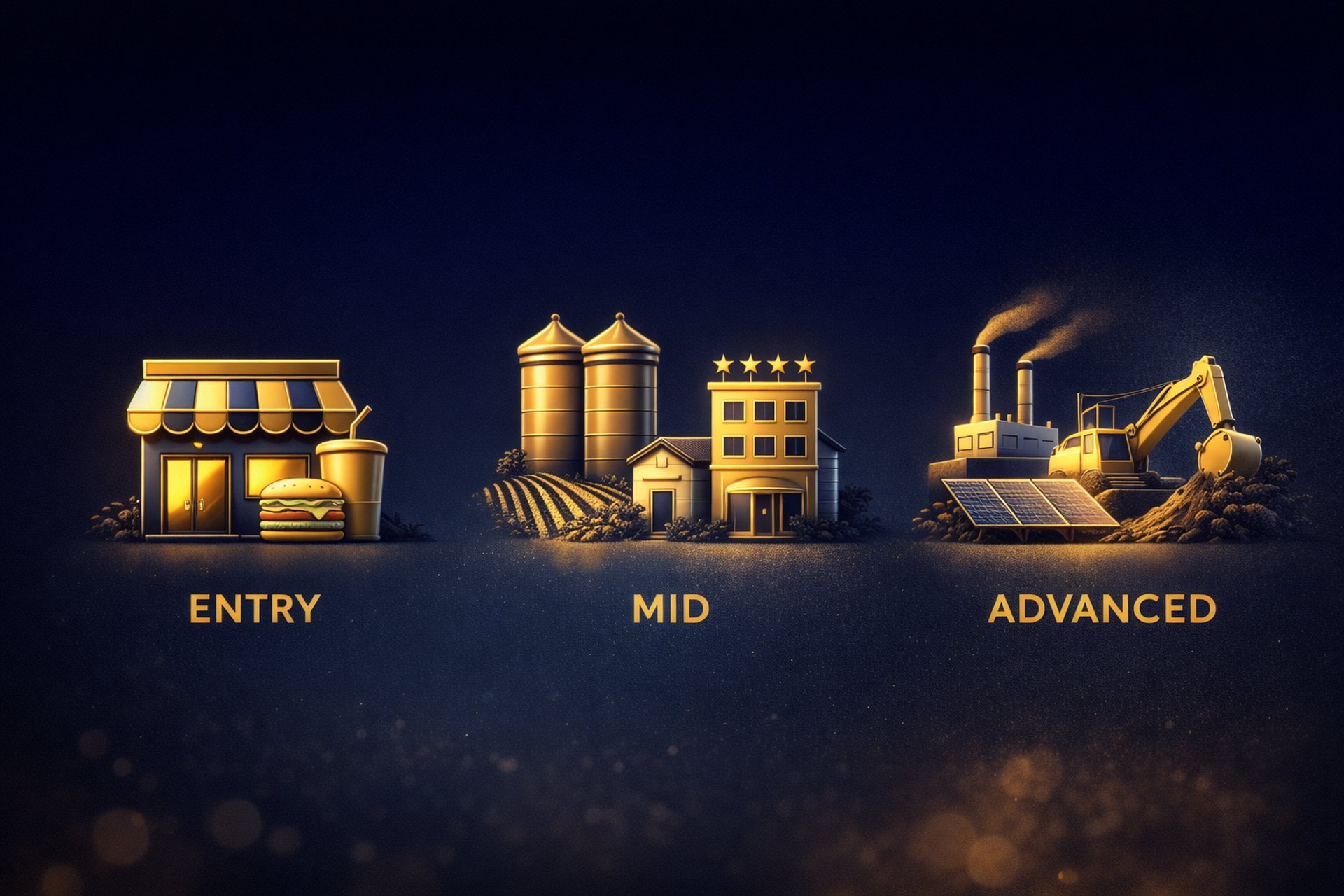
Level 1 – Entry‑level businesses
Fast food & Quick Service Restaurants (QSR)
The fast food and QSR market in Latin America is experiencing sustained growth, driven by urbanization, an expanding middle class, and the rise of delivery platforms. Franchising and scalable local concepts are among the most dynamic retail formats in the region and can be a starting point for smaller budgets, provided the entrepreneur is actively involved in operations.
Retail & FMCG (consumer goods)
Retail in Latin America is a massive market, fuelled by urbanization and e‑commerce. Food, beverage, and everyday consumer brands can scale relatively quickly in major cities through supermarket chains, convenience stores, and modern retail networks. For relocated families and entrepreneurs, this can mean anything from a niche specialty shop to a regional distribution arrangement with established retailers.
Level 2 – Mid‑size businesses (moderate capital & complexity)
Agriculture & Agri‑business
(including mushrooms and agro‑processing)
Agriculture remains a strategic pillar in Latin America, from soy, coffee, meat, and sugar to tropical fruits and niche crops. Cultivation and processing projects – including edible and medicinal mushrooms – can achieve attractive margins, especially when geared towards export markets or premium short supply chains (HoReCa, specialty shops, supplements). For many relocation clients, agri‑business is a way to combine land, production, and long‑term asset protection in one project.
Hospitality & Tourism
(eco, medical, experiential)
Countries such as Costa Rica, Mexico, Colombia, and Ecuador are actively promoting sustainable and experiential tourism. There is room for boutique hotels, eco‑lodges, and themed retreats (business, wellness, agriculture, relocation). For clients using Latin America as a Plan B destination for their families, these projects can combine tourism with residency scouting, workations, and events for the expat community, rather than pure short‑term tourism.

Logistics & Warehousing / Last‑mile
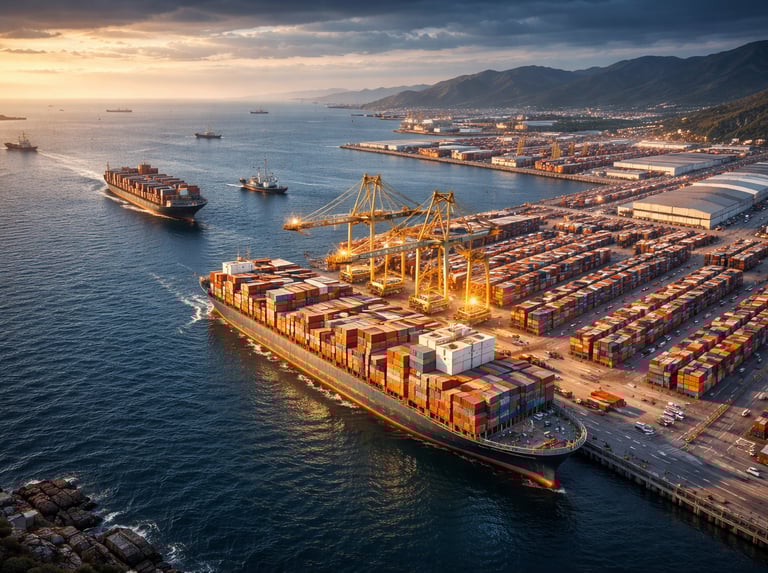
The growth of e‑commerce and the region’s complex geography make logistics – warehousing, last‑mile delivery, and cold chain – a high‑potential sector around major cities and transport corridors. The new generation of logistics hubs, including the deep‑water Chancay megaport in Peru – built with Chinese capital and designed as a major gateway between Asia and South America – will concentrate significant cargo flows and reduce shipping times and costs to Asia.
This opens opportunities for regional distribution centers, bonded warehouses, value‑added processing units, cross‑border transport services, and fulfilment solutions for e‑commerce – exactly the kind of projects a relocated entrepreneur can consider when operating in an emerging logistics hub and looking for a concrete business to run after securing residency and asset protection.
Level 3 – Advanced projects
(higher capital, heavier regulation)
Manufacturing & Light Industry
Production relocation (nearshoring/friendshoring) is driving investment in light manufacturing: building materials, packaging, food processing, and other industrial lines. Turnkey factories – such as a BCU production plant, general construction materials plants, agro‑processing, or packaging lines – can deliver strong returns when strategically positioned along supply chains and near major ports or logistics corridors. For some clients, this becomes the operational core of their Latin American holding or regional hub.
Renewable Energy & Green Projects
Latin America is a global heavyweight in hydro, wind, and solar, and several countries have ambitious renewable energy targets. These projects are capital intensive and tightly regulated, but they can offer long‑term stability and returns through partnerships with established operators or participation in new energy parks. For high‑net‑worth individuals, they can form part of a broader international diversification and wealth‑preservation strategy.


Technology, Fintech & Digital Services
Tech and fintech are among the most heavily funded verticals in the region: digital payments, lending, e‑commerce, B2B SaaS, and other digital solutions. They require technical know‑how and specialized teams, but can be combined with Latin American corporate structures and residency to optimize costs, improve regulatory diversification, and gain fast access to dynamic local markets.
Mining & Strategic Minerals
Latin America holds significant reserves of lithium, copper, nickel, and other strategic metals essential for the global energy transition. Returns can be very high, but the entry barrier is enormous: licenses, heavy capital requirements, complex regulation, ESG demands, and potential local tensions. In practice, this sector is better suited to large players and consortiums than to a first project after relocation, but it remains part of the broader opportunity map in the region.


For several of the industries above, Lat‑Am E&BM has developed example turnkey business configurations matched to different capital levels – from smaller budgets (fast food, local services, micro‑production) to larger logistics, agricultural or light‑industrial projects. We work with clients who want to decide country, business model and asset structure together, as a single relocation and asset‑protection strategy – not as three separate decisions taken at different times.
From Industry Choice to a Concrete Business
Most clients do not want just “a sector” – they want to know what exact business they can run in a given country, with their capital and risk profile. In our work, the industry, the jurisdiction and the legal/asset structure are always designed together, so that the operating company, the personal Plan B and the long‑term wealth protection strategy reinforce each other instead of pulling in different directions.
Example turnkey configurations by capital range
To make this tangible, Lat‑Am E&BM uses indicative capital bands and typical business models for each band, and where own capital is not sufficient, we can help structure and source a silent partner to co‑finance the project.
Approx. 25–100k USD: small food & entertainment concepts (street‑food, fast‑food, bars), local service networks (micro car‑wash, quick auto service), and vending‑based models in urban areas.
Approx. 100–250k USD: light manufacturing (joinery, small furniture, semi‑automatic BCU lines), and city‑level logistics (micro‑warehouses, e‑commerce fulfilment, cross‑dock hubs).
Approx. 250–500k USD: agricultural and agri‑processing projects with land and infrastructure (mushroom farms, mixed farms, agri‑tourism) and multi‑stream income structures.
500k USD and above: advanced logistics nodes, regional distribution centres, high‑capacity production lines and complex agri‑processing plants, always designed via direct 1‑to‑1 consulting rather than as “off‑the‑shelf packages”.
These examples are illustrative configurations, not fixed franchise kits. For each client, we adjust the model to their country cluster (for example Panama–Uruguay–Costa Rica vs. Argentina–Mexico–Colombia), their family situation, and their goals in terms of lifestyle, cash‑flow and asset protection.
How we turn an industry into your business
In practice, the process is straightforward:
Profile & capital: we clarify your capital, family setup, preferred country clusters and objectives (asset protection, income, lifestyle).
Industry & model: based on the sectors outlined on this page, we shortlist 2–3 concrete business models that make sense for your profile and budget band.
Structure & planning: we define the jurisdiction, company type, ownership structure and basic legal/tax pathway, aligned with your global wealth plan.
Local implementation: together with our partner network, we translate the chosen model into a step‑by‑step implementation plan (location, suppliers, staffing, banking), so that you relocate knowing not only where you are going, but also what you will operate there and how it fits into your long‑term Plan B.
Tell us your capital range, preferred countries and timeline, and we will outline 2–3 concrete business options for your profile.
© 2025. Lat-Am E&BM LLC, All rights reserved.
Contact
Lat-Am E&BM LLC
Email: office@lat-amebm.com
Location: 13093 Dover, Delaware 19901, US.
Academy
Overview
Mundo Ai
Agricultura del Futuro
Masterclasses & Webinars
Resources